The 2025 Mercedes-Benz E 200 d W214, offered in Europe from October 2024, is a 4-door rear-wheel drive (RWD) luxury sedan model. It includes a Diesel (MHEV) 1993 cm3 Inline 4 (OM654 DE20) turbocharged engine, with DOHC, EQ Boost and Start-Stop hybrid system, producing 161 KF / 161 hp / 120 kW at 3600 – 4200 engine rpm and 380 Nm of torque at 1800 – 2800 engine rpm. Combined with a 9-speed automatic transmission (Daimler-Benz 9G-TRONIC), it accelerates from 0-100 km/h in 9.5 seconds and reaches a top speed of 226 km/h. Its combined fuel consumption is 6 L/100km. The car has a length of 4949 mm, a width of 1880 mm, a height of 1468 mm and weighs 1825 kg, with a fuel tank of 66 liters.
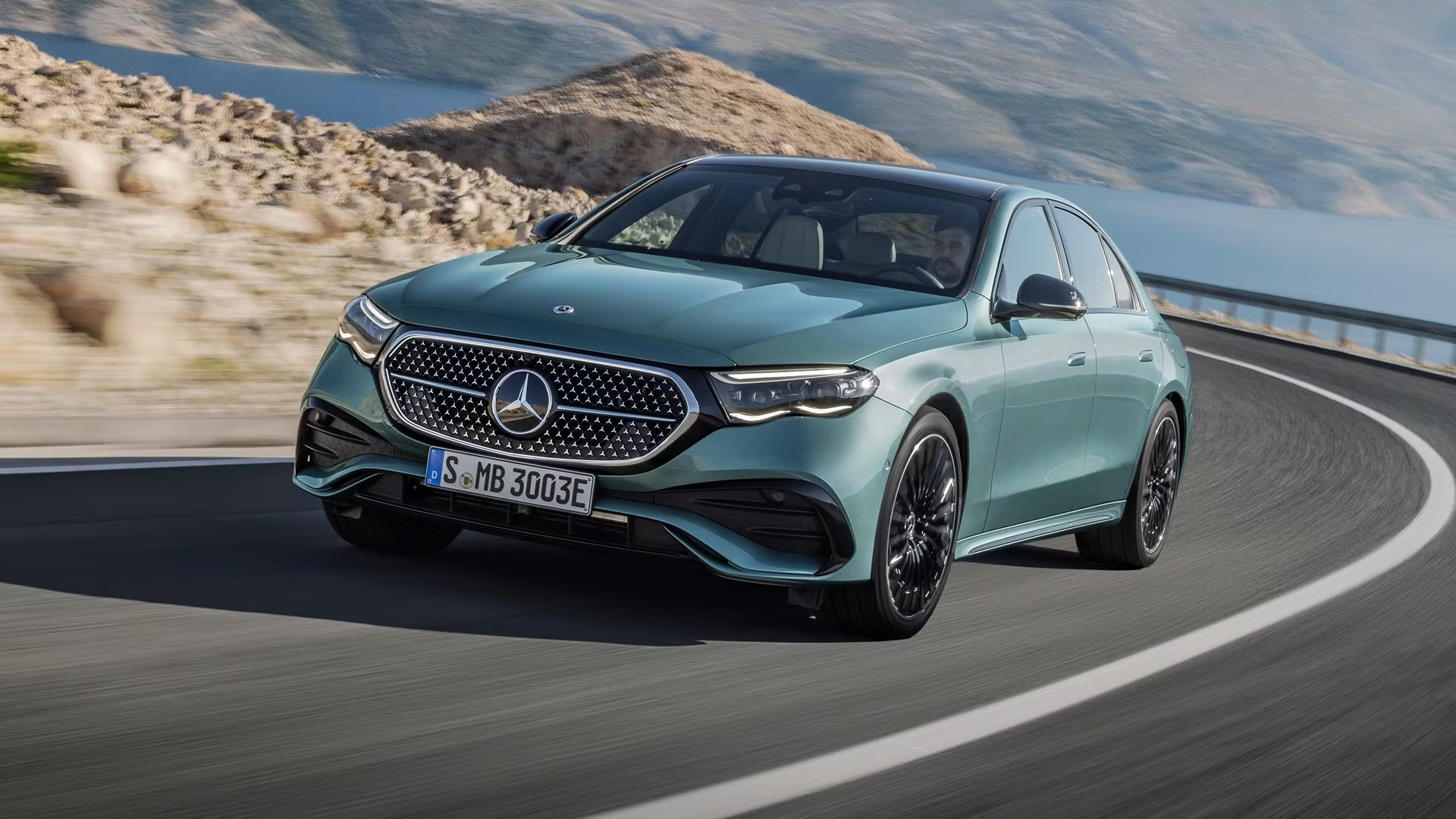
Overview
| Model: | W214 E 200 d |
|---|---|
| Production year: | 2025 |
| Transmission: | Automatic with 9 gears |
| Starting price: | € 70,000 |
| Engine size: | 2.0 L |
| Max torque: | 380 Nm |
| Cylinders alignment: | Line 4 |
| Charge system: | Turbocharged |
| Displacement: | 1993 cm3 |
| Max power: | 161 PS / 161 hp / 120 kW |
| Fuel type: | Diesel |
| Fuel consumption: | 6 L/100km combined |
| Extra-urban: | 4.4-5.3 L/100km |
| City: | 7.3-8.8 L/100km |
| Emission standard: | Euro 6e |
| Body style: | Sedan |
| 0-80 km/h: | 6.4 s |
| 0-100 km/h: | 9.5 s |
| 0-160 km/h: | 27.1 s |
| 0-200 km/h: | 58.9 s |
| Top speed: | 226 km/h |
| Curb weight: | 1825 kg |
| Gross weight: | 2530 kg |
| Length: | 4949 mm |
| Width: | 1880 mm |
| Height: | 1468 mm |
| Fuel capacity: | 66 litra |
Expert reviews
Summary
The Mercedes-Benz E 200 d W214 (2025) is a luxury sedan rated for high fuel efficiency, build quality and a smooth ride. The mild-hybrid diesel engine offers enough performance for most driving situations and excels at low fuel consumption. This model is ideal for those looking for luxury, practicality and a reasonable operating cost. The OM654 engine and 9G-Tronic transmission are generally considered reliable, although rough shifts can occur when the transmission is cold or due to outdated software.
![2003 Mercedes-Benz S 500 4MATIC W220 (Automatic / 5 Gears) AWD [2002-2005]](https://i0.wp.com/i0.wp.com/autogalactic.al/wp-content/uploads/2026/02/abc-s-class-350-benzin-gaz-super-gjendje.jpeg?fit=1280%2C960&ssl=1&resize=100,80)
![2003 Mercedes-Benz S 430 4MATIC W220 (Automatic / 5 Gears) AWD [2002-2005]](https://i0.wp.com/i0.wp.com/autogalactic.al/wp-content/uploads/2026/02/abc-4b0421d32c4ec7a3627fc1e06da5f454dedb6569.jpg?fit=1780%2C975&ssl=1&resize=100,80)
![2003 Mercedes-Benz S 350 4MATIC W220 (Automatic / 5 Gears) AWD [2002-2005]](https://i0.wp.com/i0.wp.com/autogalactic.al/wp-content/uploads/2026/02/abc-used-2004-mercedes-benz-s-class-s-600.jpg?fit=960%2C639&ssl=1&resize=100,80)
![2005 Mercedes-Benz S 400 CDI W220 (Automatic / 5 Gears) RWD [2002-2006]](https://i0.wp.com/i0.wp.com/autogalactic.al/wp-content/uploads/2026/02/abc-brabus_t12_-49.jpg?fit=2492%2C1666&ssl=1&resize=100,80)
![2000 Mercedes-Benz S 500 (ZAS) W220 (Automatic / 5 Gears) RWD [1998-2002]](https://i0.wp.com/i0.wp.com/autogalactic.al/wp-content/uploads/2026/01/abc-2000-mercedes-benz-s-class-frontside_mbs-001_505x375.jpg?fit=505%2C375&ssl=1&resize=100,80)
![2000 Mercedes-Benz S 500 W220 (Automatic / 5 Gears) RWD [1998-2002]](https://autogalactic.al/wp-content/uploads/2026/01/abc-2000-mercedes-benz-s500-101-67d2f496cdcfe.avif)
![2000 Mercedes-Benz S 430 W220 (Automatic / 5 Gears) RWD [1998-2002]](https://i0.wp.com/i0.wp.com/autogalactic.al/wp-content/uploads/2026/01/abc-merc0332.jpg?fit=732%2C488&ssl=1&resize=100,80)
![2000 Mercedes-Benz S 320 CDI W220 (Automatic / 5 Gears) RWD [1999-2002]](https://i0.wp.com/i0.wp.com/autogalactic.al/wp-content/uploads/2026/01/abc-mercedes-benz_s430_w220.jpg?fit=2252%2C1192&ssl=1&resize=100,80)
![2000 Mercedes-Benz S 320 W220 (Automatic / 5 Gears) RWD [1998-2002]](https://autogalactic.al/wp-content/uploads/2026/01/abc-2000_mercedes-benz_s-class_sedan_s430_fq_oem_1_500.avif)
